
How to Get a Good Night’s Sleep
Natural Sleep Tips for Better Health
By Dr. Kelly Synowiec-Moroney, D.C. | Tree of Life Wellness Center
Dr. Kelly here. Let’s talk about getting a good night’s sleep!
I hope you remembered to turn the clocks back this weekend. ⏰
Did you know that getting a good night’s sleep is essential to your overall health and wellness?
Sleep is when your body has an opportunity to rest, repair, and restore itself. Consistently getting too little sleep can affect your immune system, mood, energy levels, and the body’s ability to regulate inflammation.
Yet, so many people struggle to fall asleep, stay asleep, or wake up feeling refreshed.
There are several factors that play a role in getting a good night’s sleep. From your bedtime routine and bedroom environment to your mattress, pillow, and nutritional support, small changes can make a big difference.
Let’s explore some natural sleep tips to help you get the restorative sleep your body needs.
1. Plan Your Sleep Schedule
One of the best things you can do for your sleep is to make it a priority.
Sleep should be on your schedule, just like your workouts, appointments, and family activities.
Here are a few ways to establish a healthy sleep schedule:
- Plan for 7–9 hours of sleep each night. You may need 8–9 hours in bed to allow enough time for restful sleep.
- Try to go to bed and wake up at the same time every day.
- Finish eating about 2–3 hours before bedtime.
- Avoid large, heavy, or spicy meals close to bedtime.
- Give yourself enough time to wind down before going to sleep.
Why does bedtime matter?
Your body has an internal clock called the circadian rhythm. This rhythm helps regulate your sleep-wake cycle, hormone production, body temperature, and other important functions.
For many people, an earlier, consistent bedtime works better with their natural circadian rhythm.
Getting 8 hours of sleep from 10 PM to 6 AM may feel more restorative than sleeping from 2 AM to 10 AM, particularly if the later schedule conflicts with your body’s internal clock or your daily responsibilities.
The goal is to establish a consistent sleep schedule that works with your natural rhythm.
Your body needs the opportunity to move through its natural sleep cycles, including deeper stages of sleep.
2. Create a Sleep-Friendly Bedroom
Your bedroom environment can make a big difference in how well you sleep.
Keep your bedroom dark
Light exposure at night can interfere with your circadian rhythm and suppress melatonin production.
Melatonin is a hormone that helps signal to your body that it is time to sleep.
Try these simple changes:
- Use blackout curtains.
- Turn off unnecessary lights.
- Avoid bright screens close to bedtime.
- Cover bright electronic displays.
- Keep your bedroom as dark as possible.
Keep your bedroom cool
A cooler bedroom can help support better sleep.
Many people find that a bedroom temperature in the upper 60s Fahrenheit is comfortable for sleeping, although your ideal temperature may vary.
Your body naturally lowers its core temperature as you prepare for sleep. A cool room can help support this process.
Try an Epsom salt bath before bed
A warm bath can be a relaxing addition to your nighttime routine.
There are two reasons I like this idea:
First, a warm bath can help relax your body and prepare you for sleep.
Second, warming your body before bedtime can be followed by a gradual drop in body temperature, which may help signal that it is time to sleep.
You can try this relaxing bath:
- 1–2 cups of Epsom salts
- ½–1 cup of baking soda
- 10 drops of lavender essential oil
Enjoy a warm bath before bed and allow yourself some quiet time afterward.
A quick note: Epsom salts contain magnesium, but magnesium absorption through the skin has not been well established. Baking soda does not alkalize your body’s internal pH, and lavender’s effects on cortisol are not definitively established. The main benefit of this routine is creating a calming environment and helping you relax.
3. Develop a Relaxing Nighttime Routine
Getting relaxed can be as easy as avoiding a stressful book or television show before bed.
What helps you unwind?
It might be:
- Deep breathing
- Quiet time
- Calming music
- Gentle stretching
- Reading something enjoyable
- A warm bath
- Turning off your phone
The key is to create a routine that helps your mind and body transition from the busyness of the day to a restful night.
If your mind is racing with thoughts about tomorrow’s appointments, work, or family responsibilities, give yourself a few minutes to slow down.
Sometimes, the simplest changes make the biggest difference.
4. How Magnesium May Support Better Sleep
Let’s go a little deeper into magnesium.
Magnesium is an essential mineral involved in hundreds of processes throughout the body, including muscle and nerve function.
It also plays a role in the body’s systems that help regulate relaxation and sleep.
Some research suggests magnesium supplementation may help certain people with sleep quality, particularly when magnesium intake is inadequate. However, the evidence is still developing, and magnesium is not a guaranteed solution for insomnia.
Magnesium may be worth discussing with your healthcare provider if you:
- Have difficulty relaxing at bedtime.
- Experience muscle tension.
- Have trouble falling asleep.
- Wake up during the night.
- Have a diet that may be low in magnesium.
What about children who experience nightmares?
If your child is having nightmares or difficulty settling down at night, it is important to look at their overall sleep routine, stress levels, and other potential causes.
Magnesium is involved in normal nervous system function, but it has not been established as a treatment for nightmares.
Before giving magnesium or other supplements to a child, talk with their pediatrician or qualified healthcare provider about appropriate dosing and safety.

What if your mind won’t stop running?
Some people explore nutritional support such as magnesium or calming herbs like passionflower.
Passionflower has been studied for its potential calming effects, but evidence for treating sleep problems remains limited.
It is important to consider medications, underlying health conditions, and possible interactions before using herbal supplements.

5. Can Melatonin Help You Sleep?
Melatonin is an important part of your body’s sleep-wake cycle.
Your body naturally produces melatonin in response to darkness. It helps signal that it is time to prepare for sleep.
Melatonin supplements are available in different formulations.
Immediate-release melatonin releases its contents relatively quickly and is generally used to help with sleep onset.
Extended-release melatonin releases melatonin over a longer period. It may be considered for certain sleep-maintenance concerns, although waking during the night can have many different causes.
How much melatonin should you take?
More is not necessarily better.
Melatonin supplements are available in different doses, and some people may respond to a lower dose.
If you are considering melatonin, discuss the appropriate dose and timing with your healthcare provider, especially if you take medications, have an underlying health condition, or are considering it for a child.
Melatonin may cause morning grogginess, headaches, or dizziness in some people.
If you wake up feeling tired or struggle to get going in the morning, your sleep schedule, sleep quality, supplement timing, or other factors may be contributing.
6. Cortisol, Stress, and Waking Up in the Morning
Have you ever wondered why you feel wide awake at night but exhausted in the morning?
Cortisol is a hormone involved in your body’s stress response and daily rhythm.
Cortisol typically rises around the time you wake up, helping your body become alert. It generally decreases throughout the day and is lower at night.
When stress, an irregular sleep schedule, or other factors interfere with your sleep, you may have difficulty winding down at night.
Rather than assuming your cortisol levels are too high or too low, it is important to consider the bigger picture.
Your sleep schedule, stress, nutrition, medications, and overall health can all influence how you feel.
Could an evening snack help?
If you are going to bed hungry or waking up because of hunger, a small, balanced snack may help.
For some people, a snack containing protein and a source of carbohydrate can be satisfying before bed.
However, eating late at night is not necessary for everyone, and large meals close to bedtime may interfere with sleep.
The goal is to find a routine that supports your individual needs.
7. Does Your Mattress Really Matter?
For those of you who have spent thousands of dollars on a mattress and still wake up with a sore back, you already know the answer!
YES! Your mattress matters.
And it doesn’t have to be you. It could be a loved one who wakes up with a sore back.
Is the saying true? A happy wife is a happy life! 😁
If it isn’t a sore back, perhaps you wake up with numbness in your arms or discomfort in your neck.
Have you ever gone on vacation, slept in a different bed, and instantly known it wasn’t going to be a good night’s sleep?
Your mattress and pillow can influence how comfortably you sleep and how well your body is supported throughout the night.
What type of mattress is best?
That depends on YOU!
Everyone is different. Some people prefer a softer bed, while others prefer a firmer mattress.
I personally have an Emily mattress. My kids have a Kelly mattress.
The best way to determine what works for you is to try the mattress.
Since you cannot always sleep on a mattress before purchasing it, go to the store and lie on it for several minutes in your usual sleeping position.
Pay attention to how your body feels.
Does your back feel supported? Are your hips sinking too far into the mattress? Does your neck feel comfortable?
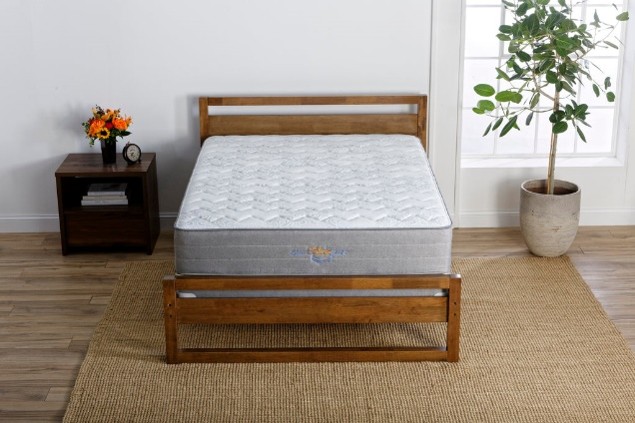
My recommendation: Start with a supportive mattress
I generally recommend starting with a firmer, supportive mattress and adjusting the comfort level from there.
If you find the mattress too firm, you can add a softer mattress topper.
This gives you the support you need while allowing you to add a couple of inches of softness to cozy into.
For your college-bound students, a mattress topper can be especially helpful.
I purchased a mattress topper for Chloee to use at school. This way, regardless of the mattress provided in her dorm, she had an additional layer of support and comfort.
A supportive mattress and pillow can help maintain a comfortable spinal position throughout the night.
Kids need good spinal support, too! Look for a pillow that supports their head and neck without pushing their neck into an uncomfortable position.
8. Mattress Materials and Indoor Air Quality
The material your mattress is made from is important, too!
An organic mattress may appeal to people who want to minimize certain chemical exposures. However, organic mattresses are not necessarily the most comfortable choice for everyone.
I personally prefer a hybrid mattress.
Hybrid mattresses typically combine a supportive spring system with comfort layers made from materials such as foam or latex.
When shopping for a mattress, consider:
- The materials used in the mattress
- Whether it has been independently tested for emissions
- Whether it has a noticeable odor
- The manufacturer’s information about chemical emissions
- Your comfort and spinal support needs
Some mattress materials can release volatile organic compounds (VOCs) into indoor air. This process is called off-gassing.
Because you may spend 7–9 hours in bed each night, it makes sense to consider the materials in your mattress and pillow.
Look for products with low emissions and allow new mattresses to air out according to the manufacturer’s instructions.
You do not necessarily need to purchase an organic mattress to make a thoughtful choice about indoor air quality.
Where do I recommend looking for a mattress?
I use Quality Sleep Shop in the La Grange area.
They hand-make mattresses in Illinois, and I like having the opportunity to explore different mattress styles and materials.
You can learn more here:
Quality Sleep Shop: https://qualitysleepshop.com/
They also offer an organic mattress line through My Green Mattress:
Remember, the best mattress is the one that provides the right combination of comfort, support, and quality for your body.
9. How Chiropractic Care Can Support Your Sleep
At Tree of Life Wellness Center, we take a natural, whole-person approach to wellness.
Sleep is an important part of that conversation.
If you are waking up with back pain, neck discomfort, or stiffness, it may be helpful to look at your sleeping position, mattress, pillow, daily activities, and spinal health.
Chiropractic care may help some people manage certain types of musculoskeletal pain, which can make it easier to get comfortable at night.
During your visit, we can discuss:
- Your sleeping position
- Your mattress and pillow
- Neck and back discomfort
- Your daily posture and movement habits
- Ways to support your overall wellness
The goal is to help you understand what may be contributing to your discomfort and develop a plan that supports your long-term health.
If you are experiencing persistent numbness, weakness, or significant pain, it is important to seek an appropriate medical evaluation.
Let’s Help You Get Your Sweet Dreams!
There can be several reasons you are not getting a good night’s sleep.
Sometimes, the solution is as simple as changing your bedtime routine.
Other times, it may involve your mattress, pillow, stress levels, nutrition, or underlying health concerns.
The goal is to help you wake up feeling refreshed, rested, and ready to enjoy your day!
If you or a loved one is struggling with sleep, let’s talk about it.
You can reach out by responding to this email or text us the word SLEEP if you would like to discuss it with Dr. Kelly.
Even better, ask me about it on your next visit!
Yours in Health Naturally,
Dr. Kelly Synowiec-Moroney, D.C.
Tree of Life Wellness Center
Elmhurst, Illinois
https://elmhurstwellness.com/
